How to Test an EGR Valve: Step-by-Step Diagnostic and Testing Guide
1. Introduction: Why Is EGR Valve Testing Important?
An Exhaust Gas Recirculation (EGR) valve is an important component of a vehicle's emission control system. It regulates the amount of exhaust gas recirculated into the engine intake to help reduce combustion temperatures and nitrogen oxide (NOx) emissions.
When an EGR valve fails to operate correctly, it may cause rough idling, reduced engine performance, excessive or insufficient EGR flow, increased emissions and diagnostic trouble codes.
For automotive technicians and repair workshops, knowing how to test an EGR valve is essential for identifying the actual cause of an EGR system problem.
For aftermarket distributors and automotive parts buyers, understanding EGR valve testing is also important when evaluating replacement components and supplier quality.
This guide explains how to test an EGR valve using an OBD diagnostic scanner, digital multimeter, visual inspection and functional testing procedures.
2. Common Symptoms of a Faulty EGR Valve
Before performing an EGR valve test, technicians should identify the symptoms that may indicate an EGR system malfunction.
Common symptoms include:
●Check Engine Light illuminated
●Rough or unstable engine idle
●Engine stalling
●Reduced engine performance
●Increased NOx emissions
●Abnormal exhaust smoke under certain operating conditions
●Poor fuel economy in some applications
●EGR-related diagnostic trouble codes
●These symptoms do not necessarily confirm an EGR valve failure. Other components, including sensors, wiring, intake passages and the EGR cooler, may produce similar problems.
3. Tools Required to Test an EGR Valve
The testing equipment depends on the EGR valve design and vehicle application.
Common diagnostic tools include:
1. OBD-II Diagnostic Scanner
An OBD-II scanner helps technicians:
●Read stored and pending fault codes
●Monitor live engine data
●Check commanded EGR position
●Compare commanded and actual valve position where supported
●Perform bidirectional actuator tests when available
2. Digital Multimeter
A digital multimeter is used to check relevant electrical circuits, including:
●Power supply
●Ground connections
●Wiring continuity
●Reference voltage
●Sensor signal voltage
Always follow the vehicle manufacturer's wiring diagram and testing specifications.
3. Vacuum Pump and Gauge
For vacuum-operated EGR systems, a hand vacuum pump can help evaluate vacuum supply, diaphragm operation and valve response.
This equipment is not applicable to every electronic EGR valve.
4. Visual Inspection Equipment
A flashlight, inspection mirror and appropriate hand tools can help technicians inspect carbon deposits, connectors, hoses, mounting surfaces and visible mechanical damage.
4. How to Test an EGR Valve: Six Diagnostic Steps
Step 1: Read EGR-Related Fault Codes
Connect an OBD-II diagnostic scanner and read stored and pending diagnostic trouble codes.
Common EGR-related codes include:
●P0401 – EGR Insufficient Flow
●P0402 – EGR Excessive Flow
●P0403 – EGR Control Circuit Malfunction
●P0404 – EGR Range / Performance
●P0405 – EGR Sensor Circuit Low
●P0406 – EGR Sensor Circuit High
These codes indicate detected EGR system abnormalities. They do not automatically confirm that the EGR valve itself is defective.
Record freeze-frame data before clearing any codes.
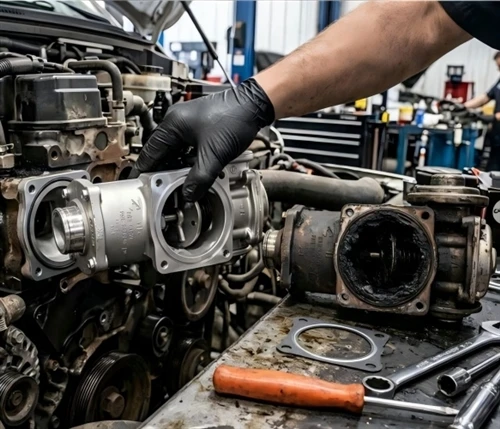
Step 2: Perform a Visual Inspection
Inspect the EGR valve and related components for:
●Carbon and soot accumulation
●Damaged electrical connectors
●Corroded terminals
●Broken or damaged wiring
●Vacuum hose leakage, where applicable
●Visible mechanical damage
●Damaged mounting surfaces or gaskets
●Heavy carbon deposits may restrict valve movement or reduce exhaust gas flow.
Also inspect the EGR passages and cooler where accessible.
Step 3: Check EGR Valve Operation Using Live Data
For electronically controlled EGR valves, use a suitable diagnostic scanner to monitor the commanded EGR position and actual position, where the vehicle provides these parameters.
Compare the requested valve movement with the reported actual position.
Possible observations include:
●Actual position follows commanded position: The position feedback appears consistent, but this alone does not prove correct EGR flow or valve sealing.
●Actual position does not follow commanded position: Investigate the actuator, mechanical movement, wiring and position sensor.
●Position readings are unstable: Check the sensor circuit, connectors and relevant control signals.
Always use vehicle-specific operating conditions and manufacturer specifications.
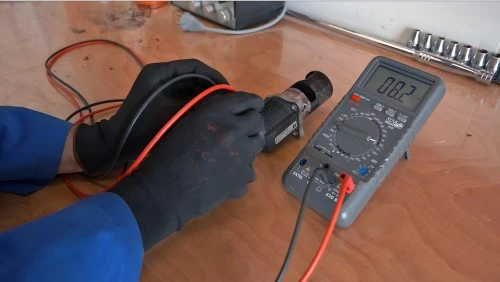
Step 4: Test the Electrical Circuit with a Multimeter
For electronic EGR valves, electrical testing may be necessary.
Depending on the circuit design, inspect:
●Power supply voltage
●Ground integrity
●Reference voltage
●Position sensor signal
●Wiring continuity
●Connector condition
Do not assume every EGR valve uses the same pin configuration or voltage specification.
Some EGR valves use integrated position sensors, while actuator designs and control circuits vary between manufacturers.
Never apply battery voltage directly to actuator or sensor terminals unless the manufacturer specifically authorizes that procedure.
Step 5: Perform an Actuator or Vacuum Test
For electronically controlled EGR valves:
●Use a compatible diagnostic tool to perform an active actuator test if supported.
●Observe whether the valve responds correctly to the requested commands.
●Check for abnormal noise, sticking, delayed movement or position feedback errors.
For vacuum-operated EGR valves:
Use a suitable hand vacuum pump to apply the specified vacuum according to the manufacturer's testing procedure.
Observe whether the diaphragm moves and whether the valve responds correctly.
Check vacuum retention where applicable.
An electronic EGR valve should not be tested using vacuum procedures unless its design specifically requires them.
Step 6: Check Actual EGR Flow and Perform Functional Verification
A valve may move correctly but still fail to deliver the required EGR flow.
Inspect:
●EGR passages for blockage
●EGR cooler for restrictions
●Intake connections
●Differential pressure sensor and related hoses, where fitted
●MAF and MAP readings
●Relevant engine operating parameters
●After diagnosis and any necessary repair, perform a functional verification under the manufacturer's specified conditions.
Confirm that the fault does not return and that the EGR system operates as expected.
5. How to Test Different Types of EGR Valves
Different EGR valve designs require different testing methods.
Electronic EGR Valves
Electronic EGR valves generally require diagnostic equipment to evaluate actuator commands, position feedback and electrical circuits.
Recommended tests:
●OBD live data analysis
●Commanded vs. actual position comparison
●Electrical circuit inspection
●Actuator active testing
●Functional verification
Vacuum-Operated EGR Valves
Vacuum-operated EGR valves are controlled by vacuum supply and related control components.
Recommended tests:
●Vacuum supply inspection
●Vacuum hose leakage check
●Diaphragm movement test
●Vacuum retention test, where applicable
●Functional operation check
EGR Valves with Integrated Position Sensors
Some electronic EGR valves provide position feedback through integrated sensors.
Testing may include:
●Reference voltage inspection
●Ground circuit testing
●Sensor signal evaluation
●Position feedback comparison
●Actuator response testing
Always consult the vehicle-specific wiring diagram and component specifications.
6. Common EGR Valve Testing Mistakes
Incorrect testing methods may lead to unnecessary component replacement.
Avoid these common mistakes:
●Replacing the EGR valve based only on a P0401 fault code.
●Assuming a valve is defective without checking carbon buildup in the passages.
●Applying incorrect voltage to electronic actuator terminals.
●Using vacuum testing procedures on incompatible electronic valve designs.
●Ignoring damaged wiring and connectors.
●Failing to inspect the EGR cooler.
●Assuming that correct position feedback automatically confirms correct EGR flow.
Skipping functional verification after repair.
A systematic diagnostic process helps technicians identify the actual cause and avoid repeated repairs.
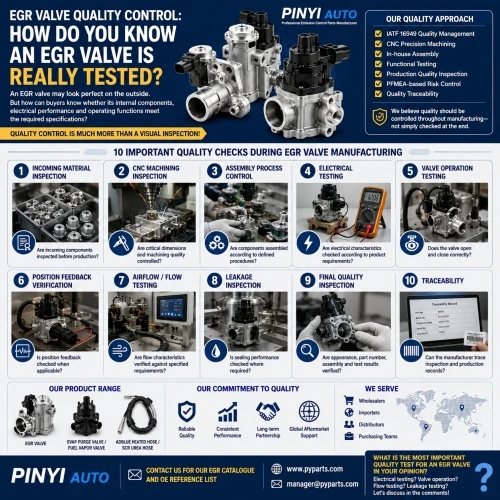
7. How Is EGR Valve Quality Tested During Manufacturing?
Automotive aftermarket EGR valve quality depends not only on final product inspection but also on manufacturing process control.
A professional EGR valve manufacturing process may include:
●Incoming material inspection
●Precision machining inspection
●Component dimensional verification
●Assembly process control
●Actuator and electrical checks
●Valve movement verification
●Sealing and leakage testing where applicable
●Functional performance testing
●Final quality inspection
The specific tests and acceptance criteria should be defined according to product design, engineering requirements and validation plans.
8. PINYI AUTO – Aftermarket EGR Valve Manufacturer
PINYI AUTO is a Chinese automotive emissions components manufacturer specializing in aftermarket replacement solutions.
Our main product categories include:
●EGR Valves
●EVAP Purge Valves / Fuel Vapor Valves
●AdBlue Heated Hoses / SCR Urea Hoses
●Our EGR valve manufacturing capabilities include precision machining, controlled assembly, functional testing and quality inspection.
●Our quality management and product development processes incorporate:
●IATF 16949 quality management
●APQP and PPAP
●PFMEA risk analysis
●Manufacturing process control
●Functional performance verification
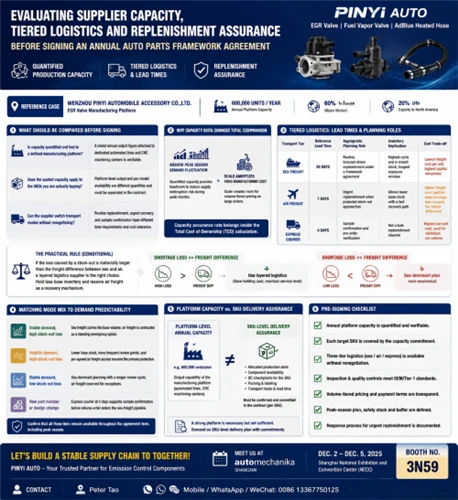
We support automotive aftermarket distributors, importers, wholesalers and private-label brands looking for EGR valve sourcing and development solutions.
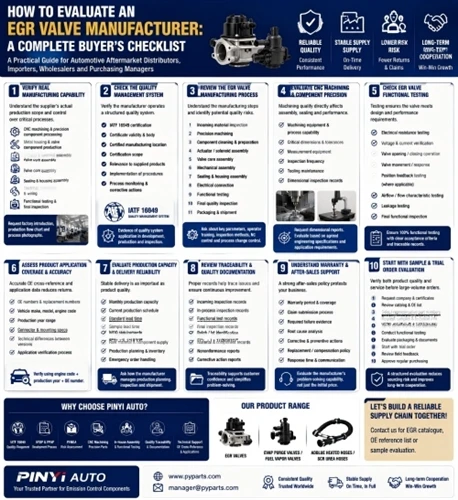
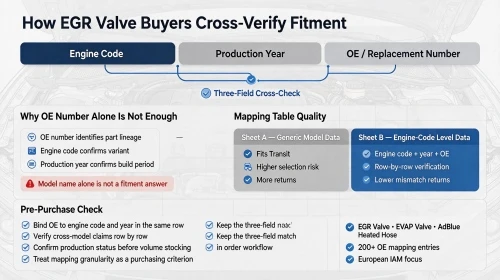
For buyers evaluating an EGR valve supplier, manufacturing capability, testing procedures, application compatibility and quality consistency are important factors.
Contact PINYI AUTO to discuss EGR valve applications, OE cross-reference information, samples and aftermarket cooperation.
9. Frequently Asked Questions About EGR Valve Testing
Q1: How do you test an EGR valve without removing it?
A suitable OBD-II scanner can be used to read fault codes, monitor live data and perform active actuator tests where supported. Electrical and system-level checks may also be required.
Q2: Can a multimeter test an EGR valve?
A multimeter can help inspect the electrical supply, ground, wiring continuity and position sensor signals of compatible electronic EGR valves. It cannot independently confirm correct EGR gas flow or mechanical sealing.
Q3: How do you test an electronic EGR valve?
Use a compatible diagnostic scanner to compare commanded and actual position, perform an actuator test where available, and inspect the relevant electrical circuits according to manufacturer specifications.
Q4: How do you test a vacuum-operated EGR valve?
Use a hand vacuum pump to apply the specified vacuum and observe diaphragm and valve movement. Check vacuum retention and inspect related vacuum lines.
Q5: Does P0401 always mean the EGR valve is faulty?
No. P0401 indicates insufficient EGR flow. Possible causes include a restricted EGR cooler, blocked passages, valve malfunction, sensor problems or control issues.
Q6: Can an EGR valve be tested on a vehicle?
Yes. Many EGR valve tests can be performed without removing the valve, using a diagnostic scanner, suitable electrical testing equipment and vehicle-specific procedures.
Conclusion
Knowing how to test an EGR valve is essential for accurate diagnosis and reliable repairs.
A complete EGR diagnostic procedure should combine fault code analysis, visual inspection, electrical testing, actuator evaluation and actual EGR flow verification.
For aftermarket distributors and automotive parts buyers, understanding these testing procedures also helps evaluate supplier capabilities and product quality.
PINYI AUTO – Your Aftermarket Partner for EGR Valves, EVAP Purge Valves and AdBlue Heated Hoses.