EGR Valve Leakage: Symptoms, Causes, Diagnosis & Solutions
1. What Is EGR Valve Leakage?
An EGR (Exhaust Gas Recirculation) valve is a key component of an automotive emission control system. It regulates the amount of exhaust gas returned to the engine intake under specific operating conditions.
EGR valve leakage occurs when the valve fails to seal properly or when unwanted gas escapes through the valve assembly. Depending on the location and type of leakage, it can affect engine performance, emissions control and vehicle drivability.
EGR valve leakage is generally divided into two categories:
Internal EGR Leakage: Exhaust gas passes through the EGR valve when the valve should be closed, often because the valve seat cannot seal properly.
External EGR Leakage: Exhaust gas escapes from the EGR valve housing, gasket, connection points or surrounding pipework.
Understanding the difference is essential for accurate diagnosis and effective repair.
2. Common Symptoms of EGR Valve Leakage
The symptoms of EGR valve leakage depend on whether the leakage occurs internally or externally.
1. Rough Idle or Unstable Engine Operation
Internal EGR leakage may allow exhaust gas to enter the intake when EGR flow should be limited.
Excessive exhaust gas at idle can disturb combustion and cause rough engine operation, unstable RPM or occasional engine stalling.
2. Engine Stalling
In some engine applications, excessive EGR flow caused by a valve that does not seal correctly may interfere with stable combustion, particularly at idle or low engine speeds.
3. Reduced Engine Performance
Incorrect EGR flow can affect engine management and combustion efficiency.
Drivers may notice reduced acceleration, poor throttle response or abnormal engine behavior.
4. Abnormal Exhaust Smoke
Depending on engine type, operating conditions and other system faults, incorrect EGR flow may contribute to abnormal exhaust smoke.
Smoke color alone cannot confirm EGR valve leakage. Fuel injection, turbocharger, intake and other engine problems should also be considered.
5. Exhaust Gas Odor or Visible Leakage
External leakage around an EGR valve, gasket or connection may produce exhaust odor, visible soot deposits or signs of gas escaping.
Technicians should inspect the surrounding components carefully, particularly when the engine is running.
6. Increased Emissions
An EGR valve that does not seal or regulate flow correctly may cause emissions control performance to deteriorate.
Depending on the vehicle's emission control strategy, the problem may contribute to elevated NOx emissions or other abnormal emission results.
3. What Causes EGR Valve Leakage?
Several mechanical, material and system-related issues may contribute to EGR valve leakage.
1. Carbon Deposits on the Valve Seat
Soot and carbon deposits can accumulate around the valve seat and sealing surface.
When deposits prevent proper contact between the valve and seat, the valve may not close completely, allowing unwanted exhaust gas flow.
2. Valve Seat Wear or Damage
Repeated operation under high-temperature conditions can contribute to wear or damage to sealing surfaces.
A damaged valve seat may reduce sealing effectiveness and cause internal leakage.
3. Mechanical Sticking
Carbon contamination, wear or damage to moving components may prevent the valve from returning to its fully closed position.
4. Damaged Gasket or Seal
External leakage may occur when a gasket, sealing interface or connection becomes damaged, deteriorated or improperly installed.
5. Housing or Connection Damage
Cracks, deformation or damage to the EGR valve housing or connecting components may create an external leakage path.
6. Improper Installation
Incorrect installation, insufficient tightening, damaged sealing surfaces or unsuitable replacement gaskets may result in external leakage after installation.
4. Internal vs. External EGR Valve Leakage
| Leakage Type | Typical Location | Possible Symptoms |
|---|---|---|
| Internal leakage | Valve seat / sealing interface | Rough idle, unstable engine operation, abnormal EGR flow |
| External leakage | Housing, gasket or connections | Exhaust odor, soot marks, visible leakage |
| EGR passage leakage | Related pipes or cooler connections | Exhaust leakage, soot deposits, abnormal operation |
Important: Not every EGR system leak originates from the EGR valve itself. EGR pipes, coolers, gaskets and related connections should also be inspected.
5. How to Diagnose EGR Valve Leakage
A systematic diagnostic procedure can help identify the leakage source and avoid unnecessary replacement.
Step 1: Read Diagnostic Trouble Codes
Use an appropriate diagnostic scanner to check stored and pending fault codes.
Possible EGR-related codes include:
P0401 – EGR Insufficient Flow
P0402 – EGR Excessive Flow
P0404 – EGR Range / Performance
These codes indicate system performance or control problems. They do not directly confirm that the EGR valve is leaking.
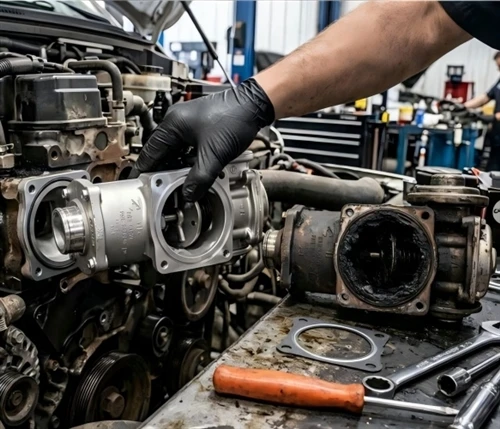
Step 2: Inspect the EGR Valve and Surrounding Connections
Check for:
Soot deposits around the valve housing
Exhaust leakage marks
Damaged gaskets or sealing interfaces
Cracks or deformation
Loose or improperly installed connections
Step 3: Check Valve Closing Performance
Where supported by the vehicle diagnostic system, verify whether the EGR valve returns to the commanded closed position.
Compare commanded and actual valve position and investigate any abnormal response.
Step 4: Inspect the Valve Seat
Check for carbon deposits, contamination, wear or damage that may prevent the valve from sealing correctly.
Step 5: Perform Appropriate Leakage Testing
Use vehicle-manufacturer-approved diagnostic procedures or suitable test equipment to verify internal or external leakage.
Avoid unsafe testing methods involving hot exhaust gases or uncontrolled pressure.
Step 6: Check the Entire EGR System
Inspect the EGR cooler, pipes, gaskets, vacuum lines, electrical connections and related components as applicable.
A complete diagnosis helps distinguish EGR valve leakage from other system problems.
6. How to Prevent EGR Valve Leakage
Preventive maintenance and correct installation can help reduce the risk of EGR leakage.
Recommended practices include:
Inspect EGR components periodically.
Check for excessive carbon accumulation.
Verify valve movement and sealing performance.
Replace damaged gaskets and seals.
Follow correct installation and tightening procedures.
Inspect related EGR pipes and cooler connections.
Select replacement components with appropriate application compatibility and quality controls.
When replacing an EGR valve, proper functional testing and sealing verification are important considerations.
7. PINYI AUTO – Aftermarket EGR Valve Manufacturer
PINYI AUTO is a Chinese automotive emissions components manufacturer specializing in aftermarket replacement solutions.
Our product portfolio includes:
EGR Valves
EVAP Purge Valves / Fuel Vapor Valves
AdBlue Heated Hoses / SCR Urea Hoses
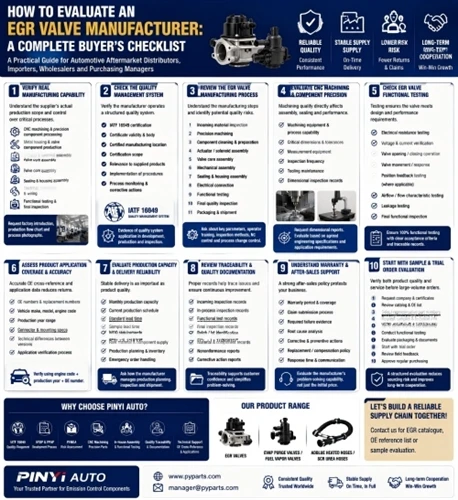
Our EGR valve manufacturing capabilities include precision machining, controlled assembly processes, functional performance testing and quality inspection.
Our quality management and manufacturing practices include:
IATF 16949 quality management system
APQP and PPAP processes
PFMEA risk analysis
Precision machining and assembly
Functional testing and product inspection
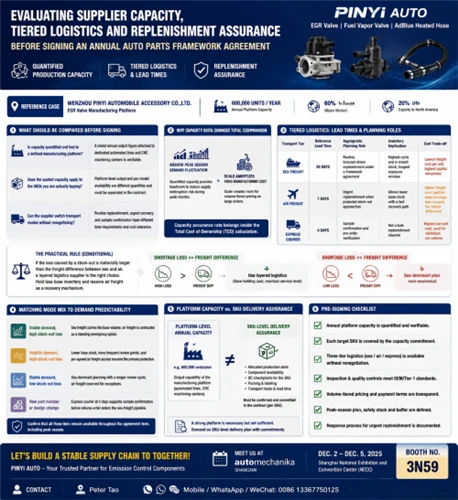
We support automotive aftermarket distributors, wholesalers, importers and private-label brands seeking EGR valve sourcing and development solutions.
Looking for an aftermarket EGR valve supplier?
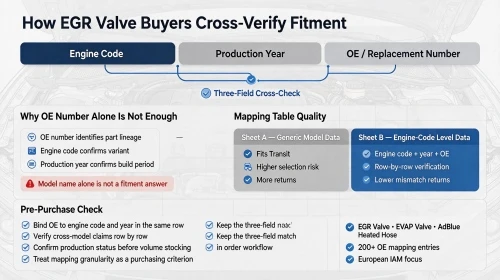
Contact PINYI AUTO to discuss OE cross-reference information, product applications, samples and business cooperation.
8. Frequently Asked Questions About EGR Valve Leakage
Q1: What are the common symptoms of EGR valve leakage?
Common symptoms may include rough idle, unstable engine operation, engine stalling, abnormal EGR flow, exhaust odor or visible soot deposits around external leakage points.
Q2: Can an EGR valve leak internally?
Yes. Internal leakage can occur when the valve does not seal correctly against its seat, allowing exhaust gas to pass through when the valve should be closed.
Q3: Can carbon buildup cause EGR valve leakage?
Yes. Carbon deposits around the valve seat may prevent complete closure and reduce sealing effectiveness.
Q4: Does EGR valve leakage always trigger a fault code?
No. Some leakage conditions may not immediately trigger a diagnostic trouble code. Fault detection depends on the vehicle's ECU strategy, operating conditions and leakage severity.
Q5: Can an EGR valve leak externally?
Yes. External leakage may occur around the valve housing, gasket or connection points. Related EGR pipes and cooler connections can also leak.
Q6: Should an EGR valve be replaced if leakage is suspected?
Replacement should be based on proper diagnosis. Technicians should identify the leakage location, evaluate valve operation and inspect related EGR system components before deciding whether replacement is necessary.
PINYI AUTO – Aftermarket EGR Valve Manufacturing & Automotive Emissions Components.