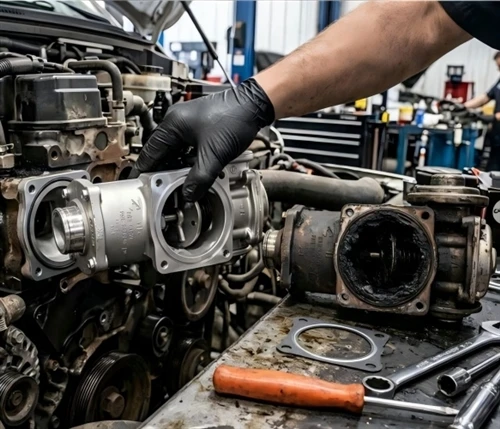
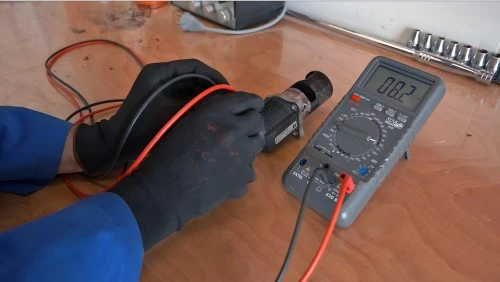
1. What Causes an EGR Valve to Fail?
An EGR (Exhaust Gas Recirculation) valve is a critical component of the automotive exhaust emission control system. Its main function is to regulate exhaust gas recirculation into the engine intake, helping reduce combustion temperatures and control nitrogen oxide (NOx) emissions.
Over time, an EGR valve may experience mechanical wear, carbon contamination, electrical problems or actuator failure. These problems can affect valve movement, EGR flow and overall engine performance.
Why do EGR valves fail?
The most common EGR valve failure causes include carbon buildup, mechanical sticking, actuator malfunction, electrical faults, excessive exhaust contamination and improper engine operating conditions.
Understanding these causes is essential for accurate diagnosis, effective maintenance and selecting a reliable aftermarket EGR valve replacement.
2. Top 10 Common EGR Valve Failure Causes
1. Carbon and Soot Buildup
Carbon accumulation is one of the most common causes of EGR valve problems, particularly in diesel engines.
Exhaust gas contains soot and other combustion by-products. Over time, these deposits can accumulate around the valve seat, internal passages and moving components.
Possible consequences:
EGR valve sticking open or closed
Restricted exhaust gas flow
Delayed valve response
Incorrect EGR flow regulation
Recommended action: Inspect the valve and EGR passages for carbon deposits. Clean or replace affected components according to the manufacturer's service procedures.
2. Mechanical Wear and Valve Sticking
Continuous opening and closing can cause wear to internal moving components.
Contamination, corrosion or mechanical damage may prevent the valve from moving smoothly.
Common symptoms:
Unstable valve operation
EGR valve stuck open
EGR valve stuck closed
Irregular engine idle
Recommended action: Inspect valve movement, internal components and mechanical clearances. Replace the valve if its operation cannot be restored within specification.
3. EGR Actuator Failure
The actuator controls the opening and closing of the EGR valve.
Depending on the design, the actuator may be electrically or pneumatically operated.
Actuator problems can result from:
Motor failure
Internal gear wear
Mechanical obstruction
Damaged control components
Possible symptoms include incorrect valve positioning, slow response and EGR control faults.
Recommended action: Test actuator operation and compare commanded valve position with actual position using appropriate diagnostic equipment.
4. Electrical Wiring and Connector Problems
Electronic EGR valves depend on reliable electrical signals and connections.
Damaged wiring, loose connectors, corrosion or short circuits may interrupt communication between the ECU and EGR valve.
Common warning signs:
EGR control circuit fault codes
Intermittent valve operation
Incorrect position feedback
Check engine light illumination
Recommended action: Inspect connectors, wiring continuity, supply voltage, ground and control signals according to the vehicle's wiring diagram.
5. Position Sensor Failure
Many electronic EGR valves include a position sensor that provides feedback to the ECU.
If the sensor generates inaccurate or unstable signals, the ECU may incorrectly interpret the valve position.
Possible symptoms:
Incorrect EGR position readings
Position correlation faults
Intermittent EGR malfunction
Engine warning light
Recommended action: Check sensor signals and compare the reported valve position with actual valve movement.
6. Blocked EGR Cooler or Passages
An EGR valve may be operating correctly while the overall EGR system still experiences insufficient gas flow.
Carbon deposits can restrict the EGR cooler, connecting pipes and intake passages.
This may result in:
P0401 – EGR Insufficient Flow
Reduced EGR circulation
Increased NOx emissions
Recommended action: Inspect the complete EGR gas pathway instead of replacing the valve without further diagnosis.
7. Excessive Oil Contamination
Oil vapor entering the intake system through crankcase ventilation can mix with soot and form sticky deposits.
These deposits may accumulate around the EGR valve and intake passages, increasing contamination and restricting valve movement.
Recommended action: Inspect crankcase ventilation, turbocharger-related oil leakage and intake contamination where applicable.
8. High Exhaust Temperature and Thermal Stress
EGR components operate under demanding thermal conditions.
Repeated heating and cooling cycles may contribute to:
Material fatigue
Thermal deformation
Seal deterioration
Internal component wear
Recommended action: Verify that the valve materials, design and operating specifications are suitable for the intended vehicle application.
9. Incorrect Installation or Application Mismatch
An EGR valve that does not match the vehicle's application may cause installation and operating problems.
Potential issues include:
Incorrect OE cross-reference
Connector incompatibility
Incorrect valve characteristics
Improper sealing or mounting
Incorrect calibration requirements
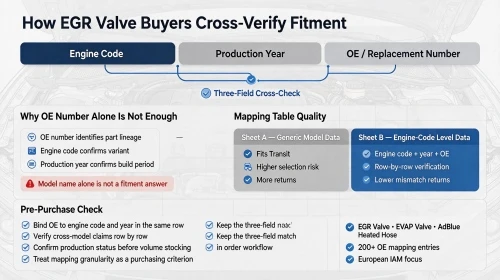
Recommended action: Verify vehicle application, engine code, OE reference and product specifications before installation.
10. Underlying Engine or Emission System Problems
Sometimes repeated EGR valve failures are symptoms of another problem within the engine or emission control system.
Possible contributing factors include:
Excessive soot production
Poor combustion
Faulty fuel injection
Restricted air intake
Turbocharger or crankcase ventilation problems
Recommended action: Investigate the underlying engine condition before installing another replacement EGR valve.
3. Common EGR Valve Failure Symptoms
How can you recognize a failing EGR valve?
The following symptoms are commonly associated with EGR system malfunctions:
| Symptom | Possible Cause |
|---|---|
| Rough engine idle | EGR valve stuck open |
| Engine stalling | Excessive EGR flow at inappropriate operating conditions |
| Loss of engine power | EGR flow or control malfunction |
| Increased NOx emissions | Insufficient EGR flow |
| Black smoke | Possible air-fuel or combustion imbalance |
| Check engine light | EGR-related control or flow fault |
| Poor drivability | Incorrect EGR operation |
| Abnormal EGR position | Actuator or position sensor problem |
These symptoms are not exclusive to EGR valve failure. Other engine and emission system faults can produce similar conditions.
4. Common EGR Fault Codes and Their Possible Causes
Diagnostic trouble codes can help technicians identify potential EGR system problems.
| Fault Code | Description | Possible Causes |
|---|---|---|
| P0400 | EGR Flow Malfunction | Flow or control system problems |
| P0401 | EGR Insufficient Flow | Carbon buildup, blocked passages, cooler restriction |
| P0402 | EGR Excessive Flow | Valve stuck open, incorrect control |
| P0403 | EGR Control Circuit | Wiring, connector or control circuit fault |
| P0404 | EGR Range / Performance | Valve movement or position feedback problem |
| P0405 | EGR Sensor A Circuit Low | Sensor circuit or wiring issue |
| P0406 | EGR Sensor A Circuit High | Sensor circuit or wiring issue |
The exact diagnostic interpretation should always be checked against the vehicle manufacturer's diagnostic information.
5. How to Diagnose EGR Valve Failure
A systematic diagnostic process can help prevent unnecessary component replacement.
Step 1: Read Fault Codes
Connect a diagnostic scanner and retrieve stored and pending trouble codes.
Step 2: Check Live Data
Review EGR commanded position, actual position and relevant airflow readings.
Step 3: Inspect the EGR Valve
Check for carbon deposits, mechanical sticking, physical damage and sealing problems.
Step 4: Test Electrical or Vacuum Controls
Inspect the actuator, wiring, connectors and vacuum supply according to the system design.
Step 5: Inspect the Complete EGR System
Check the EGR cooler, connecting pipes, intake passages and related sensors.
Step 6: Perform Functional Testing
Verify valve response and EGR system performance under the appropriate operating conditions.
Step 7: Confirm the Repair
Clear relevant fault codes, conduct the required verification procedure and confirm that the original problem has been resolved.
6. How to Prevent Premature EGR Valve Failure
Although EGR components operate under harsh conditions, correct maintenance and diagnosis can help reduce premature failure.
Recommended practices include:
Inspect EGR valves and passages periodically.
Check for excessive soot and carbon accumulation.
Maintain the engine's fuel injection and air intake systems.
Investigate excessive oil contamination.
Inspect electrical connections and actuator operation.
Verify vehicle compatibility before replacing an EGR valve.
Choose replacement components with appropriate functional performance and quality controls.
For automotive parts distributors and wholesalers, selecting a supplier with established manufacturing processes and application verification capabilities is equally important.
7. PINYI AUTO – Professional Aftermarket EGR Valve Manufacturer
PINYI AUTO specializes in the development and manufacturing of automotive emission control components for the global aftermarket.
Our main product categories include:
EGR Valves: Exhaust Gas Recirculation valves for automotive aftermarket applications.
EVAP Purge Valves: Fuel vapor control components for evaporative emission systems.
AdBlue Heated Hoses: Heated hose assemblies for SCR and AdBlue systems.
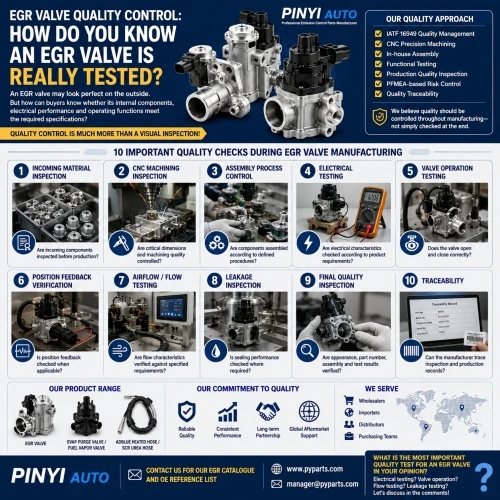
Our EGR valve manufacturing capabilities include precision machining, controlled assembly, functional performance testing and quality inspection.
Our quality management and engineering processes are supported by:
IATF 16949 quality management
APQP and PPAP
PFMEA risk analysis
Process quality control
Functional performance testing
Product inspection and traceability
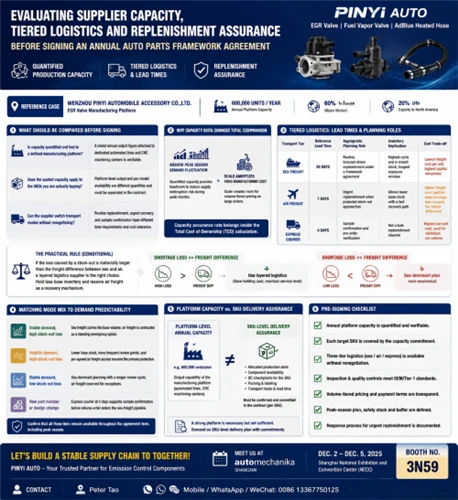
We work with automotive aftermarket distributors, wholesalers, importers and private-label brands seeking dependable EGR valve sourcing and development solutions.
Looking for an aftermarket EGR valve supplier?
Contact PINYI AUTO for OE cross-reference information, product applications, catalogue, sample evaluation and cooperation opportunities.
8. Frequently Asked Questions About EGR Valve Failure
Q1: What is the most common cause of EGR valve failure?
Carbon and soot buildup is one of the most common causes, especially in diesel engines. It can restrict valve movement and EGR gas flow.
Q2: How long does an EGR valve normally last?
There is no universal service life. It depends on vehicle design, operating conditions, engine maintenance, fuel quality and component construction.
Q3: Can a faulty EGR valve cause black smoke?
It can contribute to abnormal combustion and increased smoke under certain conditions, particularly when EGR operation disrupts the engine's air management. However, black smoke can also indicate fuel injection, turbocharger or air intake problems.
Q4: Can I clean an EGR valve instead of replacing it?
Cleaning may help when the problem is caused by removable carbon deposits. However, cleaning cannot repair a failed actuator, damaged sensor, worn internal components or electrical defects.
Q5: What is the difference between EGR stuck open and EGR stuck closed?
A stuck-open EGR valve allows exhaust gas to flow when it should be restricted, potentially causing rough idle and engine stalling.
A stuck-closed EGR valve prevents sufficient exhaust gas recirculation when required, potentially increasing NOx emissions and triggering insufficient-flow faults.
Q6: Does P0401 always mean the EGR valve is defective?
No. P0401 indicates insufficient EGR flow, which may result from a blocked cooler, restricted passages, sensor issues, control problems or an EGR valve malfunction.
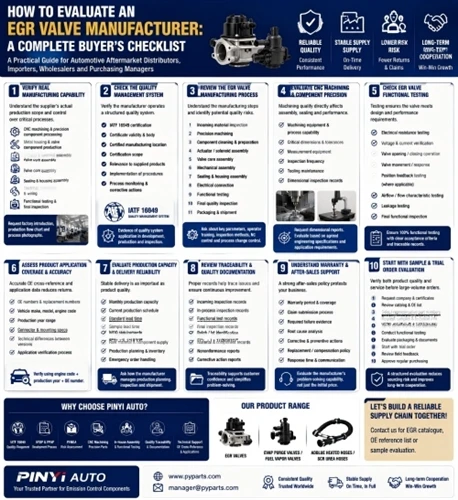
Q7: How can automotive distributors choose a reliable EGR valve supplier?
Evaluate the supplier's quality management system, manufacturing capability, product application coverage, OE cross-reference accuracy, functional testing, traceability and after-sales support.
PINYI AUTO – Automotive Emission Control Components for the Global Aftermarket.
EGR Valves | EVAP Purge Valves | AdBlue Heated Hoses