EGR Insufficient Flow (P0401): Causes, Symptoms, Diagnosis & Solutions
1. What Is EGR Insufficient Flow?
EGR insufficient flow is a common fault in diesel and gasoline engine emission control systems. It occurs when the engine control unit (ECU) detects that the actual exhaust gas recirculation flow is lower than the expected flow under specific operating conditions.
The Exhaust Gas Recirculation (EGR) system is designed to reduce nitrogen oxide (NOx) emissions by redirecting a controlled amount of exhaust gas back into the engine intake.
By introducing exhaust gas into the combustion process, the EGR system helps reduce peak combustion temperatures and control NOx formation.
When the EGR flow is insufficient, the engine may not achieve the expected emission control performance.
One of the most common diagnostic trouble codes associated with this problem is P0401 – Exhaust Gas Recirculation (EGR) Insufficient Flow Detected.
However, P0401 does not necessarily mean that the EGR valve itself has failed. The root cause may involve the valve, EGR passages, cooler, sensors or control system.
2. Six Common Causes of EGR Insufficient Flow
Understanding the causes of EGR insufficient flow is essential for accurate diagnosis and effective repairs.
1. Carbon Buildup Inside the EGR Valve
Carbon deposits and soot can accumulate inside the EGR valve during normal engine operation.
Over time, excessive deposits may restrict the valve opening or prevent the valve from moving freely, reducing the amount of exhaust gas entering the intake manifold.
2. Blocked EGR Passages
Carbon accumulation inside the EGR pipes, channels or intake manifold can restrict exhaust gas circulation.
Even when the EGR valve operates normally, blocked passages may prevent sufficient exhaust gas from reaching the engine intake.
3. Blocked EGR Cooler
The EGR cooler reduces the temperature of recirculated exhaust gas before it enters the intake system.
Heavy carbon deposits or contamination inside the cooler may restrict gas flow and contribute to an EGR insufficient-flow condition.
4. EGR Valve Stuck Closed
A mechanically stuck EGR valve may fail to open when the ECU requests exhaust gas recirculation.
Possible reasons include carbon contamination, mechanical wear, actuator malfunction or internal component damage.
5. Faulty Sensors or Pressure Measurement
The EGR system may use MAF, MAP or differential pressure sensors to monitor and calculate exhaust gas flow.
Incorrect sensor readings, damaged pressure hoses or electrical problems can cause the ECU to detect insufficient EGR flow, even when the valve itself is functioning.
6. Electrical, Vacuum or Control System Problems
Depending on the EGR system design, damaged wiring, poor electrical connections, insufficient vacuum supply or a faulty control solenoid may prevent the EGR valve from opening correctly.
3. Common Symptoms of EGR Insufficient Flow
An EGR insufficient-flow problem may cause several engine performance and emission-related symptoms.
Common signs include:
Check Engine Light: The ECU detects an abnormal EGR flow condition and stores a diagnostic trouble code.
P0401 Fault Code: The diagnostic scanner identifies EGR insufficient flow.
Increased NOx Emissions: Reduced exhaust gas recirculation may increase combustion temperatures and NOx formation.
Poor Engine Performance: Some vehicles may experience reduced engine response or abnormal drivability.
Increased Fuel Consumption: Engine management adjustments may affect fuel efficiency under certain operating conditions.
Failed Emissions Inspection: Insufficient EGR flow may cause emissions levels to exceed applicable limits.
The symptoms can vary depending on engine type, vehicle application and EGR system design.
4. How to Diagnose P0401 – EGR Insufficient Flow
A systematic diagnostic procedure helps technicians identify the actual cause instead of replacing components unnecessarily.
Step 1: Read Diagnostic Trouble Codes
Connect an OBD diagnostic scanner and retrieve stored and pending fault codes.
Check whether P0401 appears together with other EGR-related, airflow or sensor-related codes.
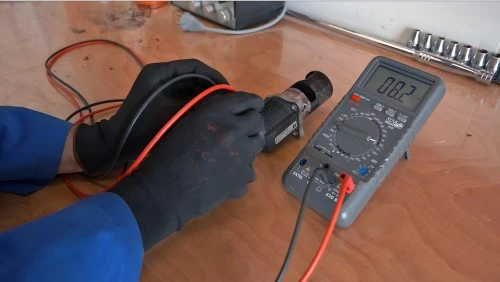
Step 2: Check EGR Valve Operation
Compare commanded EGR position with actual valve position where position feedback is available.
Check whether the valve responds correctly to ECU commands and returns to the expected position.
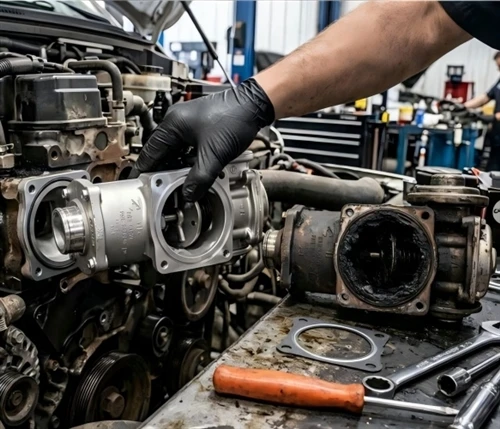
Step 3: Inspect the EGR Valve for Carbon Deposits
Remove and inspect the EGR valve according to the vehicle manufacturer's procedures.
Check for carbon accumulation, mechanical sticking, contamination and visible damage.
Step 4: Inspect EGR Passages and Cooler
Check the EGR pipes, cooler and intake passages for carbon deposits, restrictions or leakage.
Step 5: Check Sensor Readings
Verify relevant MAF, MAP and differential pressure sensor readings according to manufacturer specifications.
Inspect pressure hoses, electrical connectors and wiring.
Step 6: Perform Functional and Flow Testing
Use appropriate diagnostic equipment to verify EGR valve operation and actual system flow.
Compare test results with vehicle manufacturer specifications before determining whether the EGR valve needs replacement.
5. How to Fix EGR Insufficient Flow Problems
The correct repair depends on the actual cause of the insufficient-flow condition.
| Identified Problem | Recommended Action |
|---|---|
| Carbon buildup inside EGR valve | Clean if permitted and verify valve operation, or replace if damaged |
| Blocked EGR passages | Inspect and clean according to manufacturer procedures |
| Restricted EGR cooler | Inspect, clean or replace as appropriate |
| EGR valve stuck closed | Check actuator and mechanical condition; replace if defective |
| Faulty sensor or pressure hose | Repair or replace the affected component |
| Electrical or vacuum problem | Repair wiring, connectors, hoses or control components |
Important: Replacing the EGR valve without checking the entire EGR system may not resolve P0401. A proper root-cause diagnosis is essential.
6. How to Prevent Repeated EGR Flow Problems
◆Preventive inspection and correct maintenance can help reduce recurring EGR system problems.
◆Recommended practices include:
◆Inspect EGR valves and passages regularly.
◆Check for excessive carbon and soot accumulation.
◆Inspect EGR coolers and related pipes.
◆Verify sensor signals and electrical connections.
◆Check actuator and vacuum control performance.
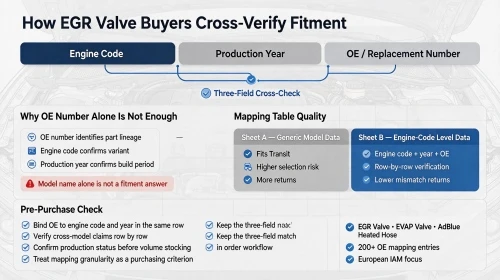
◆Select replacement EGR valves with correct vehicle application compatibility.
◆Verify functional performance after installation.
◆For automotive aftermarket distributors and repair businesses, choosing a reliable EGR valve supplier is also important for maintaining product quality and customer satisfaction.
7. PINYI AUTO – Aftermarket EGR Valve Manufacturer
PINYI AUTO is a Chinese automotive emissions components manufacturer specializing in aftermarket replacement products for international automotive markets.
Our main product categories include:
EGR Valves
Aftermarket exhaust gas recirculation valves for passenger vehicle and commercial vehicle applications.
EVAP Purge Valves
Fuel vapor control components for automotive evaporative emission systems.
AdBlue Heated Hoses
Heated hose solutions for SCR and AdBlue systems.
Our Manufacturing and Quality Capabilities
PINYI AUTO focuses on controlled manufacturing processes and consistent product performance.
Our capabilities include:
◆IATF 16949 quality management system
◆APQP and PPAP quality planning
◆PFMEA risk analysis
◆Precision CNC machining
◆Controlled assembly processes
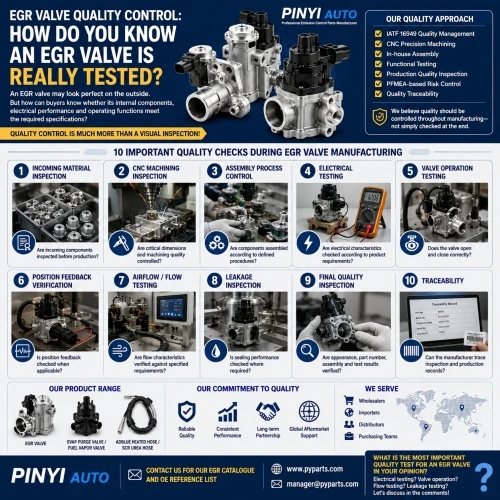
◆Functional performance testing
◆Quality inspection and traceability
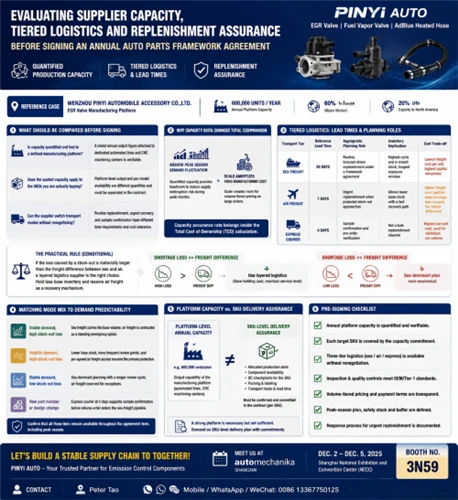
We work with automotive aftermarket distributors, importers, wholesalers and private-label brands looking for reliable automotive emissions components from China.
Looking for an aftermarket EGR valve supplier?
Contact PINYI AUTO for product catalogues, OE cross-reference information, vehicle applications, samples and business cooperation opportunities.
8. Frequently Asked Questions About EGR Insufficient Flow
Q1: What does P0401 mean on a diesel engine?
P0401 means the ECU has detected insufficient exhaust gas recirculation flow compared with the expected flow under specific operating conditions.
Q2: Does P0401 always mean the EGR valve is faulty?
No. P0401 can be caused by a faulty EGR valve, blocked EGR passages, a restricted EGR cooler, sensor problems, pressure hose issues or electrical and vacuum control faults.
Q3: Can a blocked EGR cooler cause insufficient flow?
Yes. Carbon accumulation inside the EGR cooler may restrict exhaust gas circulation and contribute to insufficient EGR flow.
Q4: Can I drive with an EGR insufficient-flow fault?
The vehicle may remain operational, but increased NOx emissions, engine management problems and potential emissions inspection failure may occur. Professional diagnosis and repair are recommended.
Q5: What is the difference between P0401 and P0402?
P0401 indicates EGR insufficient flow, while P0402 indicates EGR excessive flow. Both are system-level diagnostic codes and require further investigation to identify the root cause.
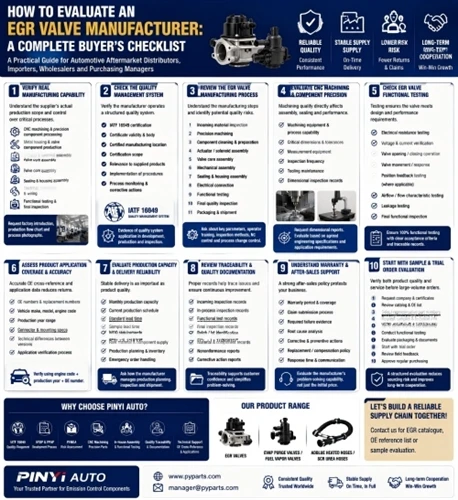
Q6: How do I choose a reliable aftermarket EGR valve manufacturer?
Check product application compatibility, OE cross-references, quality management certifications, manufacturing capabilities, functional testing and supplier technical support.
PINYI AUTO – Professional Aftermarket Solutions for EGR Valves, EVAP Purge Valves and AdBlue Heated Hoses.