EGR Valve Stuck Open: Symptoms, Causes, Diagnosis and Solutions
What Does an EGR Valve Stuck Open Mean?
An Exhaust Gas Recirculation (EGR) valve is an important component of a vehicle's emission control system. Its primary function is to regulate the amount of exhaust gas recirculated into the engine intake to help reduce nitrogen oxide (NOx) emissions.
An EGR valve stuck open means that the valve remains open when it should be closed or partially closed according to the engine operating conditions.
When excessive exhaust gas enters the intake manifold, particularly during engine idle or other operating conditions requiring limited EGR flow, the air-fuel mixture and combustion process may be disrupted.
This can lead to rough idling, engine stalling, poor drivability and increased emissions.
1. Six Common Symptoms of an EGR Valve Stuck Open
Recognizing the symptoms of an EGR valve stuck open can help vehicle owners and technicians identify potential EGR system problems.
1. Rough Engine Idle
One of the most common symptoms is an unstable engine idle.
Excessive exhaust gas entering the intake at idle can reduce the amount of fresh air available for combustion, causing engine vibration and irregular idle speed.
2. Engine Stalling
When the EGR valve remains open at inappropriate operating conditions, excessive exhaust gas may interfere with stable combustion.
In some cases, the engine may stall, particularly at idle or low engine speeds.
3. Difficult Engine Starting
An EGR valve that does not close properly may allow excessive exhaust gas into the intake during starting conditions.
This can affect combustion stability and make the engine difficult to start.
4. Poor Engine Performance
Incorrect EGR flow may affect engine response, acceleration and overall drivability.
Drivers may notice hesitation, reduced responsiveness or inconsistent engine operation.
5. Increased Smoke or Abnormal Exhaust
On diesel engines, excessive EGR flow under unsuitable operating conditions may contribute to poor combustion and increased particulate emissions.
Visible smoke depends on the engine design, operating conditions and other system faults.
6. Check Engine Light and EGR Fault Codes
When the ECU detects excessive EGR flow or an abnormal valve position, it may activate the check engine light.
Common related diagnostic trouble codes include:
P0402 – EGR Excessive Flow Detected
P0404 – EGR Range / Performance
P0403 – EGR Control Circuit Malfunction
Not every code confirms that the valve is mechanically stuck open. Proper diagnosis is necessary.
2. Six Common Causes of an EGR Valve Stuck Open
Why does an EGR valve remain open?
The problem may be related to mechanical contamination, actuator failure, electrical control or other EGR system components.
1. Carbon and Soot Buildup
Carbon deposits can accumulate around the valve seat and internal moving components.
Heavy contamination may prevent the valve from closing completely, allowing exhaust gas to continue flowing into the intake.
2. Mechanical Valve Sticking
Internal wear, contamination or damaged mechanical components may prevent the valve from returning to its fully closed position.
3. EGR Actuator Malfunction
The EGR actuator controls valve movement according to ECU commands.
If the actuator fails or cannot return the valve to its required position, excessive EGR flow may occur.
4. Position Sensor Problems
An incorrect position feedback signal may cause the ECU to misinterpret the actual valve position.
Sensor faults may also trigger EGR-related diagnostic trouble codes.
5. Wiring or Electrical Control Problems
Damaged wiring, poor connections, corrosion or control circuit faults may affect EGR actuator operation.
6. Vacuum Control System Failure
On vacuum-operated EGR systems, a faulty vacuum control solenoid, damaged vacuum hose or incorrect vacuum supply may cause improper valve operation.
3. How to Diagnose an EGR Valve Stuck Open
Replacing an EGR valve without identifying the root cause may result in repeated failures and unnecessary repair costs.
Technicians should follow a systematic diagnostic process.
Step 1: Read the Diagnostic Trouble Codes
Use an OBD diagnostic scanner to retrieve stored and pending fault codes.
P0402 is particularly relevant when excessive EGR flow is detected.
Step 2: Compare Commanded and Actual EGR Position
Where supported, compare the ECU-commanded valve position with the actual position feedback.
If the valve remains open despite a closing command, further mechanical and electrical inspection is required.
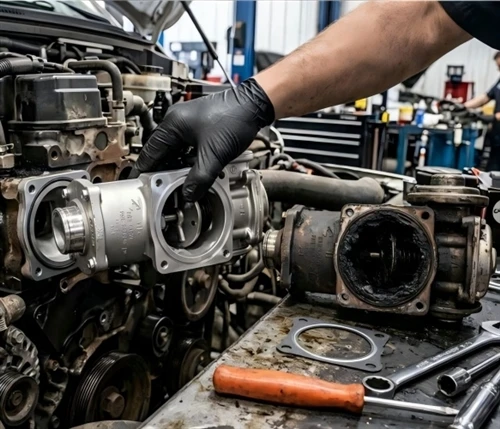
Step 3: Inspect the Valve Mechanism
Check the valve seat, moving components and internal passages for carbon buildup, contamination or mechanical damage.
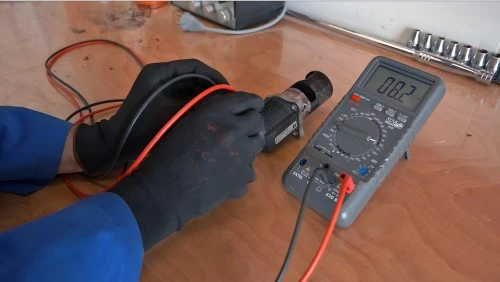
Step 4: Test the Actuator and Position Sensor
Verify actuator operation and position feedback using the vehicle manufacturer's recommended diagnostic procedures.
Step 5: Inspect Wiring and Vacuum Components
Check electrical connectors, wiring harnesses, vacuum hoses and control solenoids according to the EGR system design.
Step 6: Perform Functional Testing
Use suitable diagnostic equipment to verify valve movement and EGR system response under the specified operating conditions.
Check relevant MAF, MAP and pressure sensor readings where applicable.
4. How to Prevent Repeated EGR Valve Failures
Proper maintenance and accurate diagnosis are important for reliable EGR system operation.
Recommended practices include:
◆Inspect the EGR valve for carbon deposits and mechanical sticking.
◆Check the condition of the EGR valve seat and moving components.
◆Inspect electrical connections and actuator performance.
◆Check the EGR cooler and passages for restrictions.
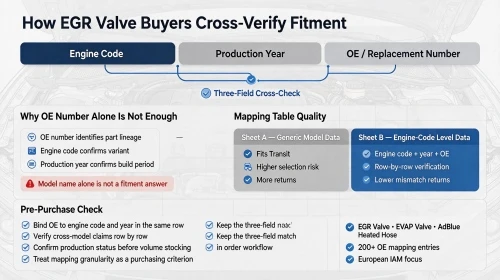
◆Verify the compatibility of replacement EGR valves with the vehicle application.
◆Perform functional testing after installation.
◆Investigate the original failure cause before replacing components.
◆Choosing a properly developed aftermarket EGR valve with controlled manufacturing and functional testing can also help support consistent replacement-part performance.
5. PINYI AUTO – Aftermarket EGR Valve Manufacturer
PINYI AUTO is a Chinese automotive emissions components manufacturer focused on aftermarket replacement solutions.
Our main product categories include:
EGR Valves: Exhaust gas recirculation valves for automotive aftermarket applications.
EVAP Purge Valves: Fuel vapor control components for vehicle emission systems.
AdBlue Heated Hoses: Heated hose assemblies for SCR and AdBlue systems.
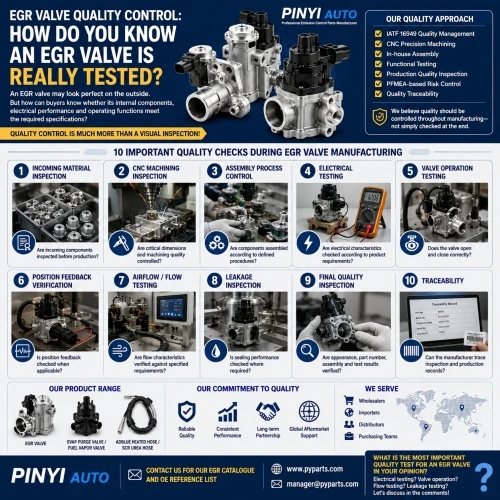
Our EGR valve manufacturing capabilities include precision machining, controlled assembly processes and functional performance testing.
Our quality management and production systems incorporate:
●IATF 16949 quality management
●APQP and PPAP processes
●PFMEA risk analysis
●Precision machining
●Controlled assembly operations
●Functional testing and quality inspection
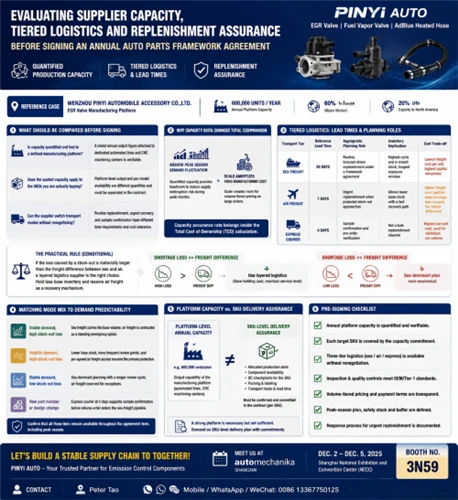
We work with automotive aftermarket distributors, wholesalers, importers and private-label brands seeking EGR valve sourcing and development solutions.
Looking for an aftermarket EGR valve manufacturer?
Contact PINYI AUTO for product catalogues, OE cross-reference information, application details and business cooperation opportunities.
6. Frequently Asked Questions About EGR Valves Stuck Open
Q1: What is the most common fault code for an EGR valve stuck open?
P0402 (EGR Excessive Flow Detected) is one of the most relevant diagnostic trouble codes. However, other EGR-related codes may appear depending on the vehicle and the specific system malfunction.
Q2: Can an EGR valve stuck open cause rough idling?
Yes. Excessive exhaust gas entering the intake at idle can disrupt combustion and cause unstable engine operation.
Q3: Can an EGR valve stuck open cause engine stalling?
Yes. In certain engine designs and operating conditions, excessive EGR flow can affect combustion stability and cause the engine to stall.
Q4: Does an EGR valve stuck open increase fuel consumption?
It may affect combustion efficiency and engine management, potentially increasing fuel consumption. The actual effect depends on engine design and operating conditions.
Q5: Can carbon buildup cause an EGR valve to remain open?
Yes. Carbon and soot deposits may prevent the valve from seating correctly or moving freely, resulting in excessive EGR flow.
Q6: Should I replace the EGR valve when P0402 appears?
Not automatically. The valve, actuator, position sensor, wiring and related EGR components should be inspected to identify the actual cause.
Q7: How can I choose a reliable aftermarket EGR valve supplier?
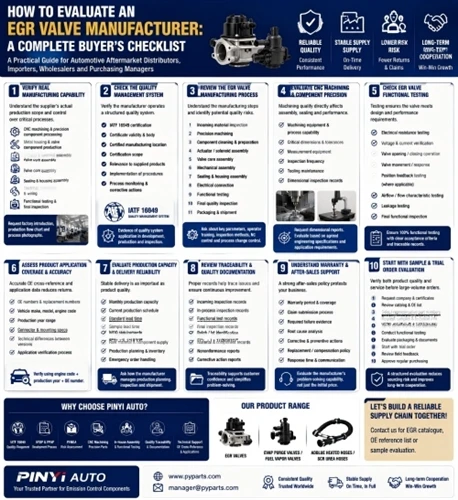
Evaluate vehicle application coverage, OE cross-reference accuracy, manufacturing processes, quality management, functional testing and supplier technical support.
PINYI AUTO – Professional Aftermarket Solutions for EGR Valves, EVAP Purge Valves and AdBlue Heated Hoses.
Contact our team to discuss your EGR valve sourcing requirements.