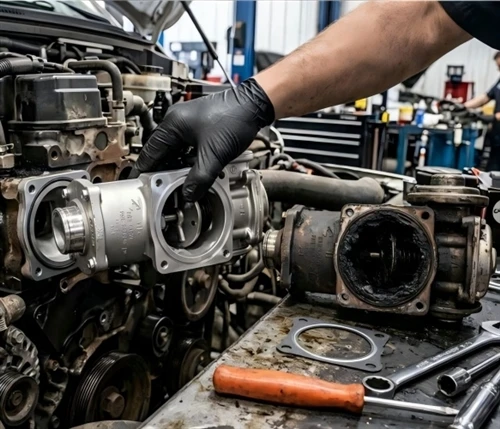
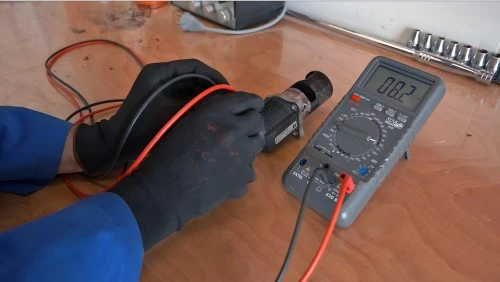
1. What Does Black Smoke from a Diesel Engine Mean?
Diesel black smoke is usually a sign of incomplete combustion caused by an imbalance between fuel injection and available air.
When a diesel engine burns fuel inefficiently, excess fuel or insufficient oxygen can produce soot particles. These particles appear as black smoke coming from the exhaust.
A small amount of smoke may occur under certain operating conditions, particularly on older diesel engines. However, persistent or excessive black smoke can indicate an engine performance problem, an air intake restriction, fuel injection issues or an emissions system malfunction.
The most important principle: Diesel black smoke is a symptom, not a diagnosis.
Identifying the root cause is essential before replacing any engine component.
2. Eight Common Causes of Diesel Black Smoke
1. Clogged Air Filter
A restricted air filter reduces the amount of air entering the engine.
When the engine receives insufficient air relative to injected fuel, combustion may become incomplete and produce excessive soot.
Common symptoms include:
Black smoke during acceleration
Reduced engine power
Poor fuel economy
Increased intake restriction
Solution: Inspect the air filter and replace it when necessary according to the vehicle manufacturer's maintenance requirements.
2. Faulty EGR Valve
The EGR (Exhaust Gas Recirculation) valve controls exhaust gas recirculation into the engine intake.
If the EGR valve becomes stuck open or allows excessive EGR flow under inappropriate operating conditions, the amount of fresh oxygen available for combustion may decrease.
This can contribute to incomplete combustion, excessive soot production and black smoke, depending on the engine design and operating conditions.
Potential EGR-related symptoms include:
Rough idle
Reduced engine performance
Excessive smoke
EGR-related diagnostic trouble codes
Abnormal airflow readings
However, a faulty EGR valve is not the only possible cause of diesel black smoke. The entire intake and fuel system should be checked.
3. Turbocharger or Boost System Problems
A turbocharger helps increase the amount of air entering the engine.
When the turbocharger cannot deliver the required boost pressure, the engine may receive insufficient air for the injected fuel quantity.
Possible causes include:
Turbocharger malfunction
Boost pressure leakage
Damaged intercooler
Loose or cracked intake hoses
Faulty boost control system
Common symptoms include black smoke under acceleration, reduced power and abnormal boost pressure readings.
Solution: Check boost pressure, intake hoses, intercooler condition and turbocharger operation.
4. Faulty Fuel Injectors
Fuel injectors must deliver the correct quantity of fuel with appropriate spray characteristics.
A defective injector may cause:
Excessive fuel delivery
Poor fuel atomization
Incorrect injection timing
Uneven combustion
Increased soot production
Solution: Check injector correction values, fuel delivery characteristics and injector performance using appropriate diagnostic equipment.
5. Incorrect Fuel Injection Timing
Incorrect injection timing may affect combustion efficiency.
Depending on the engine design and the direction of timing deviation, incorrect timing may contribute to incomplete combustion, reduced engine performance and increased smoke.
Solution: Verify injection timing and relevant engine control parameters according to the manufacturer's specifications.
6. Excessive Fuel Delivery
An engine receiving more fuel than the available air can efficiently burn may produce excessive black smoke.
Possible causes include:
Incorrect ECU calibration
Modified engine software
Fuel system malfunction
Incorrect injector specifications
Faulty fuel control components
Solution: Verify fuel delivery, ECU calibration and engine operating parameters.
7. Intake Manifold Carbon Buildup
Carbon deposits may accumulate inside diesel intake manifolds, particularly in engines equipped with EGR systems.
Heavy deposits can restrict airflow and reduce the amount of oxygen available for combustion.
This may contribute to:
Reduced engine power
Poor airflow
Increased soot production
Abnormal engine performance
Solution: Inspect intake manifold condition and airflow restrictions when appropriate.
8. MAF or MAP Sensor Problems
The Mass Air Flow (MAF) sensor and Manifold Absolute Pressure (MAP) sensor provide important information to the engine control system.
Incorrect sensor readings may affect fuel injection, boost control and EGR management.
Possible symptoms include:
Black smoke
Poor acceleration
Increased fuel consumption
Incorrect airflow calculations
Engine fault codes
Solution: Check sensor readings against expected values and inspect wiring, connectors and sensor condition.
3. Can a Faulty EGR Valve Cause Diesel Black Smoke?
Yes. An EGR valve malfunction can contribute to diesel black smoke under certain conditions.
The EGR system recirculates a controlled amount of exhaust gas into the intake to reduce combustion temperatures and NOx emissions.
When an EGR valve remains open at an inappropriate time or allows excessive EGR flow, it may reduce the oxygen concentration available for combustion.
This can contribute to incomplete combustion and increased soot formation.
However, EGR-related black smoke is often associated with other underlying problems, such as:
Excessive EGR flow
Restricted intake passages
Incorrect airflow readings
Turbocharger or boost problems
Fuel injection issues
Important diagnostic distinction:
An EGR valve stuck open may contribute to black smoke or poor combustion under certain operating conditions.
An EGR valve stuck closed more commonly causes insufficient EGR flow and increased NOx emissions. It does not automatically explain diesel black smoke.
4. How to Diagnose Diesel Black Smoke
A systematic diagnostic process can help identify the actual cause of black smoke.
Step 1: Identify When Black Smoke Occurs
Determine whether black smoke appears:
During acceleration
At idle
Under heavy load
During cold starting
Continuously while driving
The operating conditions can help narrow down possible causes.
Step 2: Read Engine Diagnostic Codes
Use an OBD diagnostic scanner to identify stored and pending fault codes.
Relevant codes may include:
P0401 – EGR Insufficient Flow
P0402 – EGR Excessive Flow
P0101 – MAF Sensor Range / Performance
P0299 – Turbocharger Underboost
These codes provide diagnostic clues but do not independently confirm component failure.
Step 3: Check Air Intake and Boost Pressure
Inspect:
Air filter
Intake hoses
Intercooler
Turbocharger
Boost pressure readings
Airflow restriction or boost leakage may be a major contributor to excessive smoke.
Step 4: Inspect the EGR System
Check:
EGR commanded position versus actual position
EGR valve operation
EGR passages
Carbon buildup
EGR cooler condition
MAF and MAP readings
Step 5: Check Fuel Injection
Inspect injector performance, fuel delivery and relevant engine control parameters.
Step 6: Verify the Repair
After identifying and correcting the root cause, verify engine operation under the original problem conditions.
Confirm that smoke levels, airflow readings and engine performance have improved.
5. How to Reduce Diesel Black Smoke
The correct solution depends on the actual cause.
Recommended maintenance and diagnostic practices include:
Replace restricted air filters.
Inspect turbocharger and boost system components.
Maintain injectors and fuel systems.
Inspect EGR valves and passages.
Check intake manifold carbon buildup.
Verify MAF and MAP sensor operation.
Avoid unverified ECU modifications.
Follow the manufacturer's maintenance schedule.
Replacing an EGR valve without confirming the root cause may not resolve the black smoke problem.
6. PINYI AUTO – Aftermarket EGR Valve Manufacturer
PINYI AUTO is a Chinese automotive emissions components manufacturer specializing in aftermarket replacement solutions.
Our product categories include:
EGR Valves
EVAP Purge Valves / Fuel Vapor Valves
AdBlue Heated Hoses / SCR Urea Hoses
Our EGR valve manufacturing capabilities include precision machining, controlled assembly processes and functional performance testing.
Our quality management and engineering processes include:
IATF 16949 quality management system
APQP and PPAP
PFMEA risk analysis
Precision machining
Controlled assembly
Functional performance testing
We support automotive aftermarket distributors, wholesalers, importers and private-label brands seeking EGR valve sourcing and development solutions.
Looking for an aftermarket EGR valve supplier?
Contact PINYI AUTO to discuss EGR valve applications, OE cross-reference information, samples and business cooperation.
7. Frequently Asked Questions About Diesel Black Smoke
Q1: What is the most common cause of black smoke from a diesel engine?
Common causes include insufficient air supply, excessive fuel delivery, faulty injectors, turbocharger problems, restricted intake systems and certain EGR system malfunctions.
The actual cause depends on the engine and operating conditions.
Q2: Can an EGR valve cause black smoke?
Yes. An EGR valve stuck open or allowing excessive EGR flow under inappropriate operating conditions may contribute to black smoke by reducing available oxygen for combustion.
Q3: Does a clogged air filter cause diesel black smoke?
Yes. A severely restricted air filter can reduce airflow and contribute to incomplete combustion and excessive soot.
Q4: Why does my diesel engine produce black smoke when accelerating?
Possible causes include insufficient boost pressure, excessive fuel delivery, restricted airflow, injector problems or EGR-related issues.
Q5: Is diesel black smoke always caused by a faulty turbocharger?
No. Turbocharger problems are one possible cause, but fuel injection, intake restriction, EGR malfunction and sensor issues should also be considered.
Q6: Can replacing the EGR valve solve black smoke?
It may solve the problem if the EGR valve is confirmed to be the root cause. However, replacing the valve alone will not resolve black smoke caused by turbocharger, injector or intake system problems.
PINYI AUTO – Aftermarket Partner for EGR Valves, EVAP Purge Valves and AdBlue Heated Hoses.